Showing posts with label Prime Minister. Show all posts

Monday, April 2, 2012

Global trade bodies warn PM Manmohan Singh of tax plan impact


International trade associations representing more than 250,000 companies have written to Prime Minister Manmohan Singh criticising new taxation proposals and warning that investment plans by overseas companies could be reconsidered.

India's budget last month outlined proposals that would allow authorities to make retroactive tax claims on overseas deals and bring in new anti-tax-avoidance measures, moves that have been criticised for further denting investor sentiment towards India.

"The sudden and unprecedented move in the Bill has undermined confidence in the policies of the Government of India toward foreign investment and taxation and has called into question the very rule of law, due process, and fair treatment in India," seven global trade bodies said in a letter to Singh.

"This is now prompting a widespread reconsideration of the costs and benefits of investing in India," continued the letter, signed by bodies including the U.S.-based Business Roundtable, the Confederation of British Industry and the Japan Foreign Trade Council.

A long-running tax struggle between London-listed Vodafone Group Plc , India's largest overseas investor, and the government, has come to symbolize the perils to foreign investors in the country.

Vodafone won a five-year legal battle in January when the Supreme Court dismissed a $2.2 billion tax demand from authorities over the British company's acquisition of Hutchison Whampoa Ltd's <0013.HK> Indian mobile assets in 2007.

That ruling was hailed by business groups as victory for clarity in India's investment climate, which has suffered due to policy paralysis, regulatory uncertainty and widespread corruption allegations against the government.

But a proposal in the recent budget to retroactively impose tax on deals conducted overseas where the underlying asset is located in India would amend 50-year-old-tax laws and allow New Delhi to pursue tax on long-concluded transactions.

"Some of our member companies had already begun reevaluating their investments in India due to increasing levels of controversy and uncertainty regarding taxation in recent years," the letter said.

Vodafone said last week it was considering a number of actions after the proposal, which it said was "grossly unjust".

The tax proposal, if written into law, could also affect Kraft Foods Inc's 2010 acquisition of Cadbury's Indian business and deals involving Indian assets sold by AT&T Inc and SABMiller Plc's purchase of Fosters.

In the letter, also sent to Finance Minister Pranab Mukherjee, the trade bodies said a plan to expand the definition of "royalty" retrospectively to 1976 would affect companies such as Ericsson.

"There appears to be an assumption, often expressed by Indian tax authorities, that India's ability to attract foreign investment is not affected by its taxation policies and practices. This simply is not the case," the letter continued.

"India will lose significant ground as a destination for international investment if it fails to align itself with policy and practice around the world," it said.

Sluggish investment is partly to blame for slowing growth in Asia's third-largest economy, which grew at just 6.1 percent in the December quarter, the weakest in nearly three years.

Tuesday, March 27, 2012

Pakistan PM Gilani to quit if SC rules against him


Pakistan Prime Minister Yousuf Raza Gilani is believed to have made up his mind to step down if the Supreme Court comes up with an "unfavourable decision" in the contempt case against him.

Gilani is under immense pressure to reopen graft cases against President Asif Ali Zardari, and his failure to do so till now has led to contempt proceedings against him in the country’s top court.

The PM reportedly made the decision after consulting the leadership of the Pakistan People's Party and its allies in the ruling coalition.

The PPP leadership decided that Gilani would tender his resignation before the Supreme Court in person if he faced any "situation" in the contempt case.

The PM will tell the court about the government's constitutional stance on the issue of presidential immunity.

The Supreme Court resumes hearing on the case today. On Monday, the contempt proceedings against PM Gilani were adjourned as his counsel Aitzaz Ahsan was unwell.

A seven-judge bench headed by Justice Nasir-ul-Mulk is hearing the contempt of court case against Gilani for failing to act on the apex court's earlier orders to reopen graft cases against President Zardari in Switzerland.

The apex court has been pushing the PPP-led government to revive the cases against Zardari since December 2009, when it annulled the National Reconciliation Ordinance, a graft amnesty issued by former military ruler Pervez Musharraf.

The government has refused to act, saying the Constitution gives the President immunity in Pakistan and abroad. Gilani has said he would prefer to be jailed in a contempt case launched against him by the apex court for not reopening the graft cases.

Monday, March 12, 2012

PM says: UPA govt. has the ‘numbers’

Amid speculation that the country is heading to mid-term polls, Prime Minister Manmohan Singh asserted on today that the UPA has the numbers required to maintain its majority in the Parliament.

Speaking to reporters before walking into the Parliament – the Budget Session begins today – the Prime Minister said that the government is willing to discuss and debate all issues.

“I am confident that this Budget Session will run smoothly,” he said.

Requesting all parties to cooperate on major challenges faced by the country, the PM added, “We are willing to discuss all issues on the floor of the Parliament.”

However, despite PM’s assurance, heated debates over what some opposition-ruled states see as Centre's efforts to usurp their powers through the National Counter-Terrorism Centre (NCTC) is expected during the Session.

On the issue of the possibility of a mid-term poll, he said, “I am confident that we have all the numbers that are needed.”

The Congress has seemed to be vulnerable following humiliating defeats in key states such as Uttar Pradesh and Punjab, apart from Goa, the opposition parties are likely to go in for the kill - by attempting to forge floor coordination with some recalcitrant constituents of the UPA to embarrass the government on critical issues.

Friday, March 9, 2012

British, Italian hostages killed by Boko Haram in Nigeria

Two Europeans held hostage in Nigeria by kidnappers claiming ties to al-Qaida were killed before rescuers could free them, authorities said on Thursday.

The men — a Briton and an Italian — were killed by their captors. A Nigerian official said the two died in the crossfire during the rescue attempt, Prime Minister David Cameron said.

Chris McManus and Franco Lamolinara were taken captive in May. The pair had been working on a bank construction project in Nigeria, a country that has seen a rise in violence linked to the Islamist extremist group Boko Haram.

Britain's Foreign Office confirmed two men were held by terrorists associated with Boko Haram, and a senior British government official said the kidnappers appeared to be from an al-Qaida-linked cell within Boko Haram, but not within the group's main faction.

The British prime minister said that after months of not knowing where the men were, U.K. authorities had "received credible information about their location." Believing the men's lives were in "imminent and growing danger," a rescue operation was mounted, Cameron said.

"The terrorists holding the two hostages made very clear threats to take their lives, including in a video that was posted on the Internet," Cameron said.

U.K. officials had asked journalists not to publicize the video, in which the kidnappers claimed they belonged to al-Qaida and threatened to kill McManus and Lamolinara if their demands were not met.

Late Thursday, the exact circumstances of how and when the men died remained unclear.

Cameron said "the early indications are clear that both men were murdered by their captors, before they could be rescued." But a senior security official in Nigeria said the two hostages apparently died in the crossfire. He requested anonymity because he was not authorized to speak to journalists.

The Nigerian security official said the failed rescue attempt took place in Sokoto, a quiet city in Nigeria's northwest. A reporter there said the military surrounded a house, and gunfire was heard for much of the afternoon and into Thursday night.

The gun battle ended after nine hours. The reporter saw the corpse of one man, while officials and eyewitnesses said at least five people had been killed in total during the fighting.

Security forces cordoned off the area, blocking journalists from getting within a kilometer (around a half mile) of the site.

Nigerian President Goodluck Jonathan condemned the killing of the hostages. He said in a statement "the perpetrators of the murderous act, who have all been arrested, would be made to face the full wrath of the law."

It was unclear what — and how many — arrests he was referring to. Nigeria's secret police spokeswoman Marilyn Ogar declined to comment, and the army and police could not immediately be reached for comment.

A number of foreigners have been kidnapped while working in Nigeria in recent years — including many who worked in the oil industry. But the kidnapping of McManus and Lamolinara in northwest Nigeria was highly unusual for that region of the country, an arid land that approaches the Sahara Desert and Nigeria's border with neighboring Niger.

Boko Haram, which means "Western education is sacrilege" in the Hausa language of Nigeria's Muslim north, has been waging an increasingly bloody fight against the nation's weak central government.

Western diplomats and analysts say Boko Haram has had contacts with two other al-Qaida-influenced terror groups in Africa. However, they say the sect has splintered, with one wing now willing to use extreme violence. The sect also has begun targeting schools and Christians in Nigeria, a multiethnic nation of more than 160 million people.

A senior British government official said Thursday the kidnappers appeared to be from an al-Qaida linked cell within Boko Haram, but not within the main Boko Haram faction. The official spoke on condition of anonymity because of the sensitivity of his work.

"They appear to have grown in strength," the official said. "Last year, they had diminished in their capability — largely because of the Nigerian authorities, but they have regrouped and it appears they are getting external help."

McManus was working for the construction company B.Stabilini when he was kidnapped May 12 by gunmen who stormed his apartment in Birnin-Kebbi. Lamolinara was also abducted. A German colleague managed to escape by scaling a wall, but a Nigerian engineer was shot and wounded.

In a statement, McManus' family said they were devastated by the news of his death. "We are also aware of the many people who were working to try and have Chris returned to our family, and his girlfriend," the statement said. "We would like to thank all of them for their efforts.

"We knew Chris was in an extremely dangerous situation. However, we knew that everything that could be done was being done."

Italian Premier Mario Monti said Cameron had conveyed the news to him by telephone. Monti said in a statement that Nigerian and British authorities had determined the operation was the "last window of opportunity to save the hostages' lives."

The statement said the situation on the ground had accelerated recently, posing an "imminent danger to the lives of the hostages." The Italians were only informed once the operation was under way, according to the statement.

Monti asked Nigeria's president to provide him with a "detailed reconstruction" of what went wrong during the operation as soon as possible, a statement from Monti's office said. The two spoke by telephone Thursday.

The mayor of the tiny northern Italian town of Gattinara, near Turin, where Lamolinara lived with his wife and two teenage children, said he would proclaim a day of mourning.

The town's mayor, Daniele Baglione, told the news agency the community was in shock, convinced that Lamolinara would have been rescued successfully. For nearly a year residents adhered fully to the directives of the Foreign Ministry to not utter a word about the kidnapping, he said.

"We were so hopeful," he told. "We didn't expect it. The Foreign Ministry asked us to keep quiet, and the whole town managed to do so and rally around the family."

Wednesday, February 29, 2012

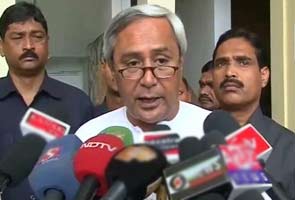
Jayalalithaa-Naveen Patnaik take on Centre over proposed amendment to Railway Protection Force

After the launch of National Counter Terrorism Centre (NCTC) was put on hold due to protests by non-Congress ruled states, Chief Ministers of Gujarat, Tamil Nadu and Odisha have trained their guns at the Centre again opposing the proposed amendment to the Railway Protection Force or RPF Act.

Jayalalithaa and Naveen Patnaik joined their Gujarat counterpart Narendra Modi in asking Prime Minister Manmohan Singh to instruct Railway Ministry not to proceed with the move.

They expressed their concern over the move in separate letters to the Prime Minister, alleging that the Centre is trying take away the power of the states.

"I am constrained to point out that the Government of India is bent upon taking one step after another that is in conflict with the federal structure of the country and is against the interest of the people of this nation," Mr Patnaik wrote in his letter to the Prime Minister.

Mr Patnaik's stand has been seconded by Tamil Nadu Chief Minister J Jayalalithaa who also wrote to the PM with her protest. Ms Jayalalithaa in her letter said that amendment is an "attempt by the Centre to usurp powers of states."

She asked the PM to drop proposed changes to Railway Force Act, saying "providing powers of police to Railway Police Force (RDF) personnel violates the Police act."

The objections from Ms Jayalalithaa and Mr Patnaik place them indirectly against Mamata Banerjee, since the Railways Ministry is assigned to Dinesh Trivedi of her party.

Mr Patnaik, Ms Jayalalithaa and Ms Banerjee recently headlined a campaign that forced the Centre to suspend its plans for a new anti-terror agency called the National Counter Terrorism Centre (NCTC). Mr Patnaik succeeded in rallying around every chief minister of a non-Congress government together; they said the powers being given to the NCTC encroached upon the rights of states to handle law and order. The NCTC, meant to become operational on March 1, has been put on hold till the Home Ministry concludes consultations with state governments.

Mr Patnaik says that the amendment the Centre is considering to the Railways Act will give police officer-like powers to members of the Railways Protection Force or RPF.

His criticism stresses heavily on the fact that state governments have not been consulted about the proposed amendment. The Railways Ministry is assigned to Dinesh Trivedi of Ms Banerjee's party, the Trinamool Congress.

"It is understood that the Ministry of Home Affairs and the Ministry of Law and Justice, Government of India have already approved the proposal of the Railway Ministry," Mr Patnaik said in his letter.

Stating that the railway tracks were not outside the jurisdiction of the states through which they run, Mr Patnaik said that similar arguments could be advanced by other establishments such as the Central Industrial Security Force, who are in charge of protecting airports, industrial undertakings and other vital installations.

Friday, February 10, 2012

Nitin Gadkari: Modi has good potential to be Prime Minister

BJP President Nitin Gadkari on Thursday said Gujarat Chief Minister Narendra Modi has got the potential to become the Prime Minister and that he is among the "five to six" contenders in the party for the country's top post.

Gadkari said he has already made it clear that the BJP has got a lot of potential leadership who is capable of becoming the Prime Minister after the next General elections due in 2014.

"Now, Modi is also one of the leaders, he has also got the potential for that. There are five to six leaders, and at the right time the party will decide who will be the prime ministerial candidate for 2014," he said.

Gadkari emphatically said "100 per cent" when asked whether the five to six leaders included Modi.

"Those five to six leaders also include Narendra bhai," he said.

Gadkari's statement came a day after the Special Investigation Team (SIT) gave its final report on Gulberg Society attack during the 2002 Gujarat riots before a Ahmedabad court amid speculation that Modi may have got relief after he faced allegations of aiding and abetting communal clashes.

He remained non-committal on why Modi was not campaigning for the party in the ongoing Uttar Pradesh elections.

"Modi is the best person to answer why he had not joined the party's election campaign in Uttar Pradesh," he said.

Modi is reportedly sore with the BJP leadership for making one of his rivals Sanjay Joshi as one of the election in-charges in Uttar Pradesh.

"First of all, from the national party we have already made a request to Narendraji that he should give some time to Uttar Pradesh and other states for elections.

"Now, he has to find out the dates for that. The matter is with him, he has to decide about it," Gadkari said.

"But I accept that Narendra bhai is a stalwart, a leader of the party and still we are expecting dates from him and if he will give his dates, we will manage".

Monday, February 6, 2012

Prime Minister Yousuf Raza Gilani admits Pak cannot afford war over Kashmir

 Prime Minister Yousuf Raza Gilani on Sunday acknowledged that the Kashmir issue would have to be resolved through dialogue and diplomacy as Pakistan "cannot afford wars" in the 21st century.

Four wars have already been fought on the Kashmir issue and the region still "was a flashpoint", but in the 21st century "we cannot afford wars", Gilani said.

"We want to resolve issues through dialogue, diplomacy, prudent policy and national consensus," he said while addressing a convention at the Prime Minister's Secretariat to mark 'Kashmir Solidarity Day'.

Gilani said the Kashmir issue remained the cornerstone of the country's foreign policy.

"We are committed to continue with the moral, political and diplomatic support to Kashmiris. The whole nation, including all the political parties, is united on the cause of Kashmir," he said.

Since Pakistan is a responsible country and a responsible nuclear power, it has to make responsible policies, Gilani said.

Pakistan's policies should be made through national consensus and by the chosen representatives of the people, and not by individuals, he said.

The Kashmir policy had been the focus of the Pakistan People's Party-led government in line with the vision of the party's founder, Zulfikar Ali Bhutto, he said.

Rallies were held across Pakistan to mark 'Kashmir Solidarity Day', which is a public holiday.

The day has been observed by Pakistan since 1990 to highlight the Kashmir issue. During the rallies, Pakistanis pledged to continue supporting the Kashmiris for what they claimed was their "right to self-determination".

Special prayers were offered at mosques and hundreds of people formed a human chain in Pakistan-occupied Kashmir. Banners calling for Kashmir's freedom were put up along roads in cities and towns across Pakistan.

Citing the policy of Pakistan-China friendship, Gilani told the convention at the PM's Secretariat that the whole country was united on this policy.

As in the case of Pakistan's policy on China, there was no difference of opinion on the Kashmir cause, he claimed. Gilani noted that there were question marks about Pakistan's policy on Afghanistan as it was made by a dictator who wore the four hats of the chairman of the Joint Chiefs of Staff Committee, the Army chief, the president and the chief executive.

Despite his power, the dictator could not sustain pressure after a call from a US under secretary, he said. In contrast, the democratic government closed NATO supply lines, got the US to vacate Shamsi airbase and boycotted the Bonn Conference on Afghanistan after NATO attack on Pakistani border posts in November last year, he said.

President Asif Ali Zardari, in a special message, reiterated Pakistan’s "fullest moral, political and diplomatic support to Kashmiris".

In a separate message, Gilani said "a peaceful settlement of the dispute in accordance with the aspirations of the Kashmiri people is a must to ensure peace and prosperity in the region".

Friday, January 27, 2012

Cabinet to decide on future of UID project today

The Cabinet Committee led by Prime Minister Manmohan Singh will meet on today to take a decision on the continuation of the Unique Identification Authority of India (UIDAI) project led by Nandan Nilekani.

Today’s meeting comes a day after Prime Minister Manmohan Singh held discussions with senior Cabinet colleagues to resolve the issue amid reports of difference between Home Ministry and Planning Commission over continuation of UIDAI project.

Reports claim that a compromise formula has been reached according to which Nilekani-led Unique ID Authority of India and the Registrar General of India will be carrying out parallel exercises to collect biometric data.

While the UIDAI will do it in 13 states, the Registrar General of India will collect data in coastal areas and areas where UIDAI has no presence. The two bodies will reportedly share some data. The Cabinet Committee will today take a decision on what data the Registrar General must share with the UIDAI.

The Cabinet committee meeting led by PM Singh will take a final call on extension of the UIDAI project, under which national identity cards are issued to entire population.

"I think we have come to an agreement on how both the projects can proceed together without any difficulty... the Cabinet Committee (on UIDAI) was rescheduled and will happen on Friday. We are quite hopeful that we will have a resolution of these issues in that meeting," Planning Commission Deputy Chairman Montek Singh Ahluwalia said after the meeting.

Besides Ahluwalia, meeting was attended by Finance Minister Pranab Mukherjee, Home Minister P Chidambaram, UIDAI chairman Nandan Nilekani and National Security Advisor (NSA) Shivshankar Menon.

At the centre of the controversy is the collection of bio-metric data of all residents.

While the Home Ministry has maintained that the Registrar General of India (RGI) under it has been mandated to collect the data through the NPR, the Nandan Nilekani-led UIDAI has also been authorised to gather the information.

Home Minister P Chidambaram has sought clarity on the status on who will capture bio-metric data - Registrar General India or UIDAI. The Home Ministry feels that the data collected by UIDAI was not secure as it is not verified by a government servant.

The data collection by UIDAI has been done by hired organisations which is a cause of concern for the Home Minister.

Since the UIDAI has already enrolled 170 million residents, the government will have to take a decision on the future of the body.

UIDAI is likely to complete the mandate of enrolling 200 million residents even before the deadline of March 31 this year.

Ahluwalia has thrown his full weight behind the UIDAI saying the project should continue. On concerns over duplication of work and extra burden on exchequer, he had stated that the project is well worth it.

The Planning Commission wants more resources for the authority for continuation of its work.

According to the Home Ministry proposal, chip-based smart cards will be issued to all residents on the basis of the record maintained by the NPR - a digital database under construction.

Friday, January 13, 2012

Pakistan President Zardari dismissed any confrontation with Army

Pakistan President Asif Ali Zardari, who arrived back here from Dubai early on Friday, has dismissed any suggestions of a confrontation with the country’s powerful Army leadership.

In a statement given to an Indian news channel, Zardari said that his government doesn’t want any confrontation with the Army or the Supreme Court and asserted that ‘matters will be sorted out’.

The embattled President said that his main aim is to bring the country’s economy back on track. On his sudden visit to Dubai, Zardari clarified that his visit was scheduled and strictly personal in nature.

His sudden departure to Dubai, yesterday evening, had led to speculation over whether he would survive heightened tension between his civilian government and the military.

A disputed memo allegedly from Zardari's government seeking US help in reining in the military has soured relations to their lowest point since a coup in 1999.

Military sources say that while they would like Zardari to go, it should be through constitutional means, not another of the coups that have marked half of Pakistan's almost 65 years of independence.

Meanwhile, the parliamentary party of the Pakistan Peoples Party would meet today. The meet is expected to bring more clarity on the situation in the restive country.

Prime Minister Yousuf Raja Gillani has also called a meeting of the Cabinet’s Defence Committee on Saturday, which will be attended by the Army Chief, in a possible sign of efforts to reduce friction.

Yesterday, shortly after Zardari left, Army Chief General Ashfaq Kayani met his top commanders fuelling speculation that the Generals, who set security and foreign policies, have lost patience with the government.

However, political analysts say Kayani doesn't want a coup because the Army is fighting Islamist militants, the country is facing economic ruin and seizing power would trigger domestic and international criticism. But they say the Generals may be happy to allow a Supreme Court hostile to the government to dismiss Zardari if it can find a "constitutional" way to do so.

On Wednesday, the Prime Minister fired the Defence Secretary in a rare public display of assertiveness by the civilian government against the Army, as the fallout from the memogate scandal.

The court, regarded as an ally of the army, is investigating that affair and a second one linked to past corruption cases against the President. Both could potentially be used as a pretext to oust the current civilian leadership, which is showing no signs of bending.

Early last month, Zardari had traveled to Dubai for medical treatment, triggering rumours that he was either being pushed out by the powerful Army or was fleeing a potential coup. He returned after a few weeks, but tensions have continued to soar in the country, with critics gleefully predicting the government's imminent downfall.

The crisis is consuming the attentions of the ruling elite in a country that is struggling to overcome economic turmoil and a bloody Al Qaeda-fuelled insurgency.

The Army has ruled Pakistan for much of its six-decade existence, and it still sees itself as the rightful custodian of the country's interests. No civilian Pakistani government has ever completed its term in office.

The Zardari government, which was democratically elected in 2008, is determined to finish its term.

General elections are scheduled for next year, but could well take place sooner.

Tuesday, December 13, 2011

PM: Govt considering Rs 1000 crore credit risk guarantee fund to encourage banks

Government is mulling setting up a Rs 1,000 crore Credit Risk Guarantee Fund to encourage banks to give loans to the poor, Prime Minister Manmohan Singh said on even as he asserted that policies cannot have one-size- fits-all approach towards both big and small cities.

"To encourage banks to lend in significant volumes to the economically weaker sections and low income groups, we are considering the establishment of a Credit Risk Guarantee Fund with a corpus of Rs 1,000 crore in the current year," Singh said in his speech at the national conference on JNNURM.

He maintained that the experience of Jawaharlal Nehru National Urban Renewal Mission (JNNURM) has been "mixed" since it was launched in December 2005.

"But we are encouraged by the good work that has been done and also the lessons learnt. Perhaps, the most important achievement of JNNURM is that there is much greater awareness Tuesday of the need to plan for urban habitats consistent with aspirations of modern India," Singh said.

The government had appointed two committees- headed by Arun Maira and Isher Ahluwalia- and is likely to implement some of the recommendations made by them to improve JNNURM.

Referring to Ahluwalia's recommendations, Singh said, "Some of these include introducing a local bodies finance list in the Constitution, empowering the bodies with exclusive taxes and unlocking land value by putting in place a transparent and accountable mechanism of public land..."

He cautioned against having an all encompassing policy. "Our policies cannot have a one-size-fits-all approach towards both big and small cities," Singh said.

Mayawati: Want PM, CBI under Lokpal

Uttar Pradesh Chief Minister Mayawati on Today came out in support of Anna Hazare’s demands on the Lokpal issue, while taking pot shots at the Congress-led Central government.

While she did not mention Hazare or Team Anna during the press conference held here today, Mayawati endorsed their main demands of bringing the Prime Minister, Group C and D Central government employees, and the CBI under the ambit of Lokpal.

The UP CM was spelling out her party’s stand on Lokpal ahead of tomorrow’s all-party meet on the issue.

Mayawati said the Lokpal should have control over the CBI so as to prevent its misuse by Central governments.

“I am also a victim of misuse of CBI in the Taj Corridor case,” she told reporters.

According to her, an effective Lokpal would automatically curb criminalisation of politics while tackling corruption.

She also demanded proper representation of all backward sections of society in the Lokpal.

Mayawati said the Congress was not serious about bringing a strong Lokpal. She also hit out at the Centre for having non-serious attitude about bringing back black money.

Listing out her party’s steps to curb corruption in the state, Mayawati said stern action has been taken against party members and ministers whenever any complaint has been received, including from the state Lokayukta.

She further said that her government has implemented the citizen’s charter in the form of UP Janhit Kanun in the state.

Wednesday, November 30, 2011

Congress core group meets on FDI issue

Amid the continuing logjam over allowing FDI in retail, the Congress core committee is meeting here right now to discuss the issue.

The meeting is being held at Prime Minister Manmohan Singh’s residence. Among others, UPA chairperson Sonia Gandhi, Finance Minister Pranab Mukherjee, Commerce Minister Anand Sharma, Home Minister P Chidambaram and Congress chief’s political secretary Ahmed Patel are attending the meeting.

That meeting is being held hours after Sonia Gandhi this morning chaired a meeting of Congress’ parliamentary party to discuss the issue. That meeting was attended by all top Congress leaders and its ministers in the UPA government.

At the meeting, Pranab Mukherjee apprised Congress MPs of the government’s stand on the issue. He said that FDI in retail will help bring inflation.

Also, Commerce Minister Anand Sharma will brief Congress MPs on the issue tomorrow.

Sonia is reportedly upset over the continuing deadlock over the retail FDI issue, which has been disrupting the proceedings inside the Parliament.

With the Prime Minister ruling out a roll back and the Opposition not willing to lower its stand the issue, the Congress finds itself in a fix and is now seeking the bipartisan support of rival parties and its key allies.

A section of Congress leaders including Chennithala and Sanjay Singh are firmly opposed to allowing FDI in the retail sector as they term it as anti-farmer move, anti-people move.

In a bid to end the deadlock, the government is reportedly mulling to suspend the decision for some time and reduce the extent to which foreign direct investment should be allowed in the retail sector to appease the opposition, which is showing a rare unity on the issue.

Today’s parleys also hold significance as PM Singh yesterday defended the government’s decision to open the retail sector and ruled out a roll back in this regard.

Addressing the national convention of the Congress party’s youth wing, the Prime Minister said that it will create employment opportunities and benefit the country’s economy in the long run.

Singh said, “The present deadlock over the government’s decision to allow FDI in the retail sector is hampering important business in Parliament. We have not taken this decision in haste. It is, in fact, a well calculated decision, which will boost productivity and employment.”

Defending the Cabinet’s decision, Singh said, “It will certainly benefit the economy in the long run.”

Allaying fears that the entry of corporate retail giants will destroy the domestic retail market, the Prime Minister said, “Small retailers need not worry about the entry of global corporate big-wigs since we have also imposed certain safeguards to protect the interest of small retailers at home.”

“After a careful analysis of the retail sector in foreign markets, we are hopeful that both small and big retailers will flourish and prosper at the same time if FDI is allowed in this sector, which will bring latest technology and improve the agriculture sector.”

Making a fresh appeal to the Opposition, Singh said, “All issues of conflicts should be resolved through discussion in Parliament but by stalling the proceedings inside the House, our opponents are cheating the people of India.”

However, he expressed hope that the present impasse will be resolved soon.

Manmohan Singh’s statement holds significance as the all-party meeting convened yesterday ended inconclusively with both the government and the Opposition failing to reach a consensus over the issue.

During the meeting, the Opposition demanded an immediate roll back of the government’s decision on allowing 51% FDI in retail sector and threatened to disrupt the proceedings inside Parliament till the government gives an assurance in this regard.