Showing posts with label US jobs. Show all posts

Wednesday, February 15, 2012

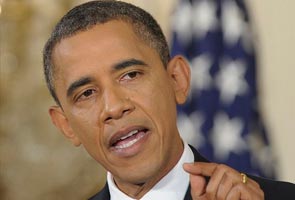
President Brack Obama: Don't look for skilled workers in India, China

President Barack Obama has said that he does not want US companies to look for skilled and educated workers in India and China in fields like engineering, technology and science. To prevent that, Obama said, he wants to give the school and teachers the resources they need to train and educate students in the US.

"Employers today are looking for most skilled, educated workers. I don't want them to find them in India or China. I want businesses to find those workers right here in the US," Obama said after sending the annual budgetary proposals for the fiscal 2013 to the Congress.

In his State of the Union address last month, Obama had said his administration would offer incentives to those firms which will create jobs in the country.

"The skills and training that employers are looking for begins with the men and women who educate our children," he said while addressing at a community college in a suburb here. The President said he wants the Congress to give the schools the resources to keep good teachers on the job and reward the best.

"In return, they also need to give schools the flexibility to stop just teaching to the test and replace teachers who aren't helping kids learn. That's something that we can do," he said, adding that the Congress needs to stop the interest rates on student loans from doubling this July. Now is not the time to make school more expensive for young people. And they can act right now to make that change.

They also need to take the tuition tax credit that my administration put in the budget over these last few years -- a tax credit that saves families thousands of dollars on tuition -- and we need to make that permanent, he said. "It shouldn't be temporary; it should be permanent," he asserted.

He said,"So between the increases we've provided in Pell grants, these tax credits, keeping interest rates low. Millions of students across the country have benefited from that," he said Obama said tuition inflation has gone up in recent years. "If you can't stop tuition from going up, then funding you get from taxpayers will go down. Because higher education cannot be a luxury; it is an economic imperative that every family in America should be able to afford. That's part of the American promise in the 21st century".

Friday, January 27, 2012

India Inc to Obama: We are creating jobs in US, Europe

With HCL Technologies announcing 10,000 jobs for locals in the US and Europe, India Inc Thursday chose the WEF meet to send a strong message that Indian IT firms are creating and not stealing jobs in troubled western economies.
    
Also, a message emerged from British Prime Minister David Cameron's advice to the European Union (EU) that instead of being a threat, the emerging economies like India can be of great help to Europe.
    
Concluding a Free Trade Agreement (FTA) with India by the year-end would be in Europe's interest, he said.
    
"We need to have a check-list to tackle the euro crisis... There has to be FTAs, bilateral trade agreements and EU trade agreements with countries like India and Singapore, among others by the end of the year," he said.
   
His plain-speak to Brussels (EU headquarters) comes against delay in trade-opening pact with India.
   
Barely a day after President Barack Obama hit out against outsourcing, HCL Technologies' Vice Chairman Vineet Nayar made a major announcement here that his company would create 10,000 locals jobs in the US and Europe in the next five years.
    
"Companies in today's world of globalisation need to create jobs wherever they go. We have taken a pioneering step...", he said.
    
Wipro chief Azim Premji, known for his frank talk, said the issue of outsourcing is "getting hyped up since elections are coming up... The US has become over-sensitive on jobs".
     
Chairman of Mahindra Satyam Vineet Nayyar hinted at creating jobs in the western economies from where they get bulk of business. "Indian firms when they go overseas, will have to create jobs there. We will certainly do so," he said.
     
German Chancellor Angela Merkel also wanted investment in Europe to create employment.

Obama in his State of Union address had hit out at outsourcing.
    
"No American company should be able to avoid paying its fair share of taxes by moving jobs and profits overseas. From now on, every multinational company should have to pay a basic minimum tax. And every penny should go towards lowering taxes for companies that choose to stay here and hire here," he had said.
    
Amid economic uncertainties and rising unemployment in the western world, the focus is on generation of jobs.
    
On Wednesday, Citigroup chief Vikram Pandit had said that job-creation was the single biggest issue, both in developed and developing markets.
    
According to him, 400 million new jobs could be needed to be generated in next 10 years.
    
Indian IT industry, which rakes in about USD 60 billion revenues from overseas markets, depends significantly on outsourcing of business processes of the Western companies.
    
Painting a pessimistic outlook, the International Labour Organisation earlier this week had said that urgent attention is needed to create 600 million new jobs in the next 10 years.
    
"Despite strenuous government efforts, the jobs crisis continues unabated, with one in three workers worldwide, or an estimated 1.1 billion people, either unemployed or living in poverty," ILO said.

Monday, January 23, 2012

How US lost out on iPhone work

When Barack Obama joined Silicon Valley's top luminaries for dinner in California last February, each guest was asked to come with a question for the president.

But as Steven P Jobs of Apple spoke, President Obama interrupted with an inquiry of his own: what would it take to make iPhones in the United States?

Not long ago, Apple boasted that its products were made in America. Today, few are. Almost all of the 70 million iPhones, 30 million iPads and 59 million other products Apple sold last year were manufactured overseas.

Why can't that work come home? Mr Obama asked.

Mr Jobs's reply was unambiguous. "Those jobs aren't coming back," he said, according to another dinner guest.

The president's question touched upon a central conviction at Apple. It isn't just that workers are cheaper abroad. Rather, Apple's executives believe the vast scale of overseas factories as well as the flexibility, diligence and industrial skills of foreign workers have so outpaced their American counterparts that "Made in the USA" is no longer a viable option for most Apple products.

Apple has become one of the best-known, most admired and most imitated companies on earth, in part through an unrelenting mastery of global operations. Last year, it earned over $400,000 in profit per employee, more than Goldman Sachs, Exxon Mobil or Google.

However, what has vexed Mr Obama as well as economists and policy makers is that Apple - and many of its high-technology peers - are not nearly as avid in creating American jobs as other famous companies were in their heydays.

Apple employs 43,000 people in the United States and 20,000 overseas, a small fraction of the over 400,000 American workers at General Motors in the 1950s, or the hundreds of thousands at General Electric in the 1980s. Many more people work for Apple's contractors: an additional 700,000 people engineer, build and assemble iPads, iPhones and Apple's other products. But almost none of them work in the United States. Instead, they work for foreign companies in Asia, Europe and elsewhere, at factories that almost all electronics designers rely upon to build their wares.

"Apple's an example of why it's so hard to create middle-class jobs in the US now," said Jared Bernstein, who until last year was an economic adviser to the White House.

"If it's the pinnacle of capitalism, we should be worried."

Apple executives say that going overseas, at this point, is their only option. One former executive described how the company relied upon a Chinese factory to revamp iPhone manufacturing just weeks before the device was due on shelves. Apple had redesigned the iPhone's screen at the last minute, forcing an assembly line overhaul. New screens began arriving at the plant near midnight.

A foreman immediately roused 8,000 workers inside the company's dormitories, according to the executive. Each employee was given a biscuit and a cup of tea, guided to a workstation and within half an hour started a 12-hour shift fitting glass screens into beveled frames. Within 96 hours, the plant was producing over 10,000 iPhones a day.

"The speed and flexibility is breathtaking," the executive said. "There's no American plant that can match that."

Similar stories could be told about almost any electronics company - and outsourcing has also become common in hundreds of industries, including accounting, legal services, banking, auto manufacturing and pharmaceuticals.

But while Apple is far from alone, it offers a window into why the success of some prominent companies has not translated into large numbers of domestic jobs. What's more, the company's decisions pose broader questions about what corporate America owes Americans as the global and national economies are increasingly intertwined.

Companies and other economists say that notion is naive. Though Americans are among the most educated workers in the world, the nation has stopped training enough people in the mid-level skills that factories need, executives say.

To thrive, companies argue they need to move work where it can generate enough profits to keep paying for innovation. Doing otherwise risks losing even more American jobs over time, as evidenced by the legions of once-proud domestic manufacturers - including G.M. and others - that have shrunk as nimble competitors have emerged.

Apple was provided with extensive summaries of The New York Times's reporting for this article, but the company, which has a reputation for secrecy, declined to comment.

This article is based on interviews with more than three dozen current and former Apple employees and contractors - many of whom requested anonymity to protect their jobs - as well as economists, manufacturing experts, international trade specialists, technology analysts, academic researchers, employees at Apple's suppliers, competitors and corporate partners, and government officials.

Privately, Apple executives say the world is now such a changed place that it is a mistake to measure a company's contribution simply by tallying its employees - though they note that Apple employs more workers in the United States than ever before.

They say Apple's success has benefited the economy by empowering entrepreneurs and creating jobs at companies like cellular providers and businesses shipping Apple products. And, ultimately, they say curing unemployment is not their job.

"We sell iPhones in over a hundred countries," a current Apple executive said. "We don't have an obligation to solve America's problems. Our only obligation is making the best product possible."