Showing posts with label NATO. Show all posts

Monday, March 26, 2012

'US won’t punish soldiers over NATO strike in Pak'


 The US military has decided that none of its soldiers involved in a NATO airstrike in November last year that had killed 24 Pakistani soldiers will face disciplinary charges, an incident that had plunged the bilateral ties to a new low.

A second inquiry to determine whether any American military personnel should be held accountable for the incident concluded that the Americans fired in self-defence and should not be punished, reported quoting three senior military officials.

"We found nothing criminally negligent on the part of any individual in our investigations of the incident," a senior American military official was quoted as saying.

The other mistake that contributed to the fatal cross-border strike was the regrettable result of battlefield confusion.

Ties between the US and Pakistan plunged to a new low after the November incident, which had also complicated the allied mission in Afghanistan.

An American investigation in December had found that both US and Pakistani troops were to be blamed for the deadly exchange of fire, but had noted that the Pakistanis fired the first shots from two border posts.

The investigation had found that the Pakistani soldiers had kept firing even after the Americans tried to warn them that they were shooting at allied troops in Afghanistan.

Pakistan has rejected these conclusions and blamed the American forces for the deadly incident. After the December investigation, the American chain of command in Afghanistan and at the Central Command set out to determine culpability of its soldiers involved.

"The military's decision is expected to anger Pakistani officials at a time when the two countries are gingerly trying to patch up a security relationship left in tatters over the past year from a series of episodes," including the shooting of two Pakistanis in Lahore by a CIA contractor and the Navy SEALs raid in Abbottabad that killed bin Laden, the NYT said.

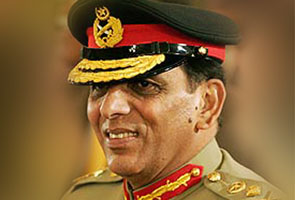
Head of the US military's Central Command Gen James Mattis is scheduled to hold long-delayed meetings this week in Islamabad with Pakistani Army Chief Gen Ashfaq Parvez Kayani to discuss the airstrike probe, as well as new border coordination procedures to prevent the episode's recurrence.

Mattis is also expected to discuss opportunities for training, arms sales and improving border coordination centres, military officials said.

The November attack had set in motion two inquiries with the first investigation concluding that Pakistani troops fired first on a joint Afghan-American patrol, prompting the Americans to respond with fire.

The investigation had determined that it took about 45 minutes for a NATO operations officer in Afghanistan to notify a senior allied commander about Pakistan's calls that its outposts were under attack, one of several breakdowns in communication that contributed to the airstrike.

American military legal experts said that the episode illustrated the difficulties of assigning blame when an unintended chain of events results in tragedy.

US troops have taken several steps in the wake of the airstrike to ensure such an accident does not happen again. These include reviewing and harmonising all directives related to border operations, increased training and coordination, improved surveillance before missions and more current information on the location of border installations on both sides.

"Cross-border communications have been improved, command levels at border coordination centres have increased, and command relationships have been redefined where needed," NATO spokesman Jimmie Cummings said.

Pakistan's Parliament is scheduled to resume debate this week on its review of relations with the United States. Obama is also expected to meet Pakistan Premier Yousuf Raza Gilani in Seoul, where the two will take part in the nuclear security conference.


Monday, February 27, 2012

A suicide car bomb attack on military airport in Afghanistan

A suicide car bomber killed at least nine people in an attack on a military airport in eastern Afghanistan on today, officials said, the latest incident of violence and protests since copies of the Koran were inadvertently burned at a NATO base last week.

There was no official indication the explosion at the gates of Jalalabad airport was linked to other deadly protests and riots, although the Taliban quickly claimed responsibility for the attack as "revenge" for the Koran burning.

Anti-Western fury has deepened significantly since the desecration of the Muslim holy book at the main NATO base in Afghanistan.

Twelve people were wounded by the suicide bomb at the airport and casualties appeared to be civilians and Afghan soldiers who were guarding the gate, the Interior Ministry said in a statement.

A spokeswoman for the NATO-led International Security Assistance Force (ISAF) in Nangarhar province, of which Jalalabad is capital, said the explosion did no damage inside the military airport, which is used by ISAF troops.

Riots have raged across Afghanistan over the past week despite widespread apologies from U.S. leaders, including President Barack Obama and military commanders.

On Sunday, seven U.S. military trainers were wounded when a grenade was thrown at their base in Afghanistan's north.

Chants of "Death to America" have been common at protests and some demonstrators have raised the white Taliban flag.

With few signs of the crisis abating, the U.S. ambassador to Afghanistan said the United States should resist the urge to pull troops out of Afghanistan ahead of schedule.

"Tensions are running very high here. I think we need to let things calm down, return to a more normal atmosphere, and then get on with business," Ambassador Ryan Crocker told, "State of the Union" in an interview from Kabul.

"This is not the time to decide that we are done here. We have got to redouble our efforts. We've got to create a situation that al Qaeda is not coming back," he said.

Under an international agreement, foreign combat forces are due to leave Afghanistan by the end of 2014, a process which is already underway.

Tuesday, December 6, 2011

Yousuf Gilani: Pakistan to review all accords with US, Nato, UN

Pakistan will review all its agreements with the US and NATO in the aftermath of the November 26 airstrike that left two dozen Pakistan Army soldiers dead, Prime Minister Yousuf Raza Gilani has said.


Gilani said in Lahore on Sunday that the government had decided to review the agreements made by then president Pervez Musharraf's government with the US, NATO, UN and the International Security Assistance Force (ISAF), reported Dawn.

The NATO airstrike on two checkposts in Mohmad Agency late last month left 24 Pakistan Army soldiers dead, sparking outrage in the country. Islamabad promptly stopped NATO supply through the country.

Gilani said: "Soon after the NATO attack... we took up this issue very seriously by involving all stakeholders, including military and political leadership."

He said the political and military leadership, along with the Defence Committee of the Cabinet (DCC), see the Nov 26 incident as a reason to revise the entire terms of business (ToBs) on all national and international issues such as war on terror and security of the region, made by the Musharraf government with the US, NATO, ISAF and the UN.

Friday, December 2, 2011

Pakistan Army Chief gave troops full liberty to respond to future attacks

Pakistan Army Chief Gen Ashfaq Parvez Kayani on Friday gave his troops "full liberty" to respond to any further cross-border attacks by NATO forces in Afghanistan in the wake of an air strike that killed 24 Pakistani soldiers, official sources said on Friday.

The powerful Army Chief told commanders of units deployed along the western border with Afghanistan that they had "full liberty of action to respond (by) employing all capabilities" available at their disposal, the sources said.

Kayani was quoted by the sources as saying that there should be "no ambiguity in the rules of engagement for everyone down the chain of command" if they faced an attack by NATO forces.

Such an action would "require no clearance at any level" and the Army would "provide resources as required on ground", he was quoted as saying.

Following Saturday's air strike on two military border posts in Mohmand Agency that killed 24 soldiers, Pakistan closed all NATO supply routes and asked the US to vacate Shamsi airbase, reportedly used by CIA-operated drones.

Pakistan also decided to boycott the Bonn Conference on Afghanistan to protest the attack.

The sources said Kayani had described the NATO attack as a "blatant act of aggression" that was "unacceptable". The Army Chief said he had issued directions that "any act of aggression" would be responded to with "full force, regardless of the cost and consequences".

While lauding the response of his troops to the NATO air strike, Kayani said the action could have been more effective if the Pakistan Air Force had joined in.

However, it was "no fault of the PAF" that it could not participate in the action and a timely decision could not be taken due to the breakdown of communications and a lack of clarity, Kayani was quoted as saying by the sources.

Any aggressor will not "walk away easily" and "no loss will be considered greater than upholding the national institution's honour", the sources further quoted the Army chief as saying.

Tuesday, November 29, 2011

Pakistani PM Gillani: No more ‘business as usual’ with US

Pakistan's Prime Minister has ruled out ‘business as usual’ with the United States after a NATO attack killed 24 Pakistani soldiers and the army threatened to curtail cooperation over the war in Afghanistan.

Saturday's incident on Pakistan's border with Afghanistan has complicated US attempts to ease a crisis in relations with Islamabad and stabilize the region before foreign combat troops leave Afghanistan.

"Business as usual will not be there," Prime Minister Yusuf Raza Gilani told when asked if ties with the United States would continue. "We have to have something bigger so as to satisfy my nation."

While the NATO strike has shifted attention from what critics say is Islamabad's failure to go after militants, Gilani's comments reflect the fury of Pakistan's government and military - and the pressure they face from their own people.

"You cannot win any war without the support of the masses," Gilani said. "We need the people with us."

The relationship, he said, would continue only if based on "mutual respect and mutual interest." Asked if Pakistan was receiving that respect, Gilani replied: "At the moment, not."

Gilani's comments cap a day of growing pressure from the Pakistani military, which threatened to reduce cooperation on peace efforts in Afghanistan.

"This could have serious consequences in the level and extent of our cooperation," military spokesman Major General Athar Abbas said.

Pakistan has a long history of ties to militant groups in Afghanistan so it is uniquely positioned to help bring about a peace settlement, a top foreign policy and security goal for the Obama administration.

Washington believes Islamabad can play a critical role in efforts to pacify Afghanistan before all NATO combat troops pull out in 2014 and it cannot afford to alienate its ally.

US national security officials met at the White House on Monday to discuss Pakistan following the weekend incident, which prompted Pakistan to shut down NATO supply routes into Afghanistan in retaliation and which was the worst of its kind since Islamabad allied itself with Washington in 2001.

"We have been here before. But this time it's much more serious," said Farzana Sheikh, associate fellow of the Asia program at Chatham House in London.

"The government has taken a very stern view. It's not quite clear at this stage what more Pakistani authorities can do, apart from suspending supplies to NATO forces in Afghanistan."

The weekend attack was the latest perceived provocation by the United States, which infuriated and embarrassed Pakistan's powerful military in May with a unilateral special forces raid that killed al Qaeda leader Osama bin Laden.

On Saturday, NATO helicopters and fighter jets attacked two military outposts in northwest Pakistan, killing the 24 soldiers and wounding 13, the army said.

NATO described the killings as a "tragic, unintended incident." U.S. officials say a NATO investigation and a separate American one will seek to determine what happened. The U.S. investigation will provide initial findings by December 23, military officials said.

"It is very much in America's national security interest to maintain a cooperative relationship with Pakistan because we have shared interests in the fight against terrorism, and so we will continue to work on that relationship," White House spokesman Jay Carney told reporters.

A Western official and an Afghan security official who requested anonymity said NATO troops were responding to fire from across the border at the time of the incident.

Pakistan's military denied NATO forces had come under fire before launching the attack, saying the strike was unprovoked and reserving the right to retaliate.

Abbas, the military spokesman, said the attack lasted two hours despite warnings from Pakistani border posts.

Monday, November 28, 2011

Pakistani Army do not accept NATO’s apology

Pakistani Army on Monday said that it does not accept NATO apology for a cross-border air attack that killed 24 Pakistani soldiers.

Expressing its disgust over the whole incident, Pakistani Army spokesman Major General Athar Abbas warned that NATO’s action could lead to serious consequences.

According to Geo News, Abbas said NATO’s apology is not enough.

Fury spread in Pakistan on Sunday over the attack that could undermine the US effort to wind up the war in Afghanistan.

NATO described the killings as a "tragic unintended incident" and said an investigation was underway. A Western official and an Afghan security official who requested anonymity said NATO troops were responding to fire from across the border.

It's possible both explanations are correct: that a retaliatory attack by NATO troops took a tragic, mistaken turn in harsh terrain where identifying friend and foe can be difficult.

"All of this is extremely murky and needs to be investigated," said a US official in Washington, who spoke on condition of anonymity. "Our goal today is ... that the investigation gets mounted in a way that is confidence-building on all sides."

Militants often attack from Pakistani soil or flee after combat across a porous border that NATO-led troops, under their United Nations mandate, cannot cross.

What is clear is the incident could undermine US efforts to improve ties with Pakistan so that the regional power helps stabilise Afghanistan before NATO combat troops go home by the end of 2014.

The attack was the latest perceived provocation by the United States, which infuriated Pakistan's powerful military with a unilateral special forces raid that killed al Qaeda leader Osama bin Laden in May.